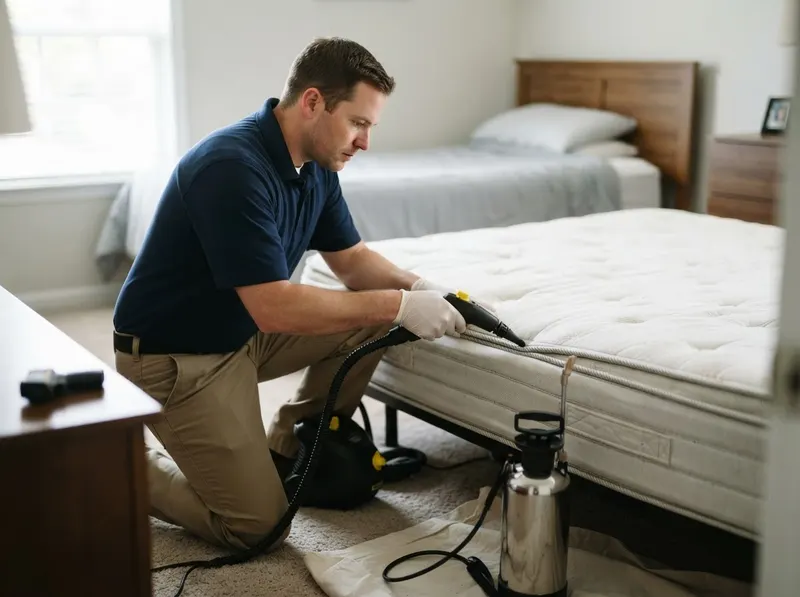
Bed bug thermal and residual eradication targets Cimex lectularius infestations by combining two distinct elimination methods. High-output convective heating systems raise ambient indoor temperatures between 122°F and 135°F. According to research published by the Journal of Integrated Pest Management, bed bugs and their eggs experience total cellular dehydration and protein coagulation when exposed to 118°F for 90 minutes or 122°F instantly. Specialized axial air movers circulate hot air deep into mattress seams, structural baseboards, wall framing voids, and soft furnishings where conventional contact sprays often fail to penetrate.
While structural heat eliminates living bed bugs and viable eggs during the heating cycle, it provides no residual chemical barrier once surfaces cool to normal room temperature. For this reason, professional remediation pairs thermal treatment with an application of long-lasting residual insect growth regulators and dual-action microencapsulated suspensions. Guidelines from the U.S. Environmental Protection Agency emphasize that integrated approaches combining thermal dynamics with registered chemical residuals significantly lower the risk of post-treatment reinfestation. In historic neighborhoods like Augusta Road and Alta Vista, multi-layered lathe-and-plaster walls and deep pine subfloors create complex structural pathways that demand targeted dusting in wall switchplates alongside perimeter applications conforming to Clemson University Department of Pesticide Regulation application standards.
Preparation dictates eradication success. Residents in residential communities like North Main, Overbrook, and Parkins Mill must prepare the treatment envelope by bagging aerosol cans, high-proof spirits, meltable waxes, soft vinyl blinds, and prescription medications. Air monitoring systems tracked using thermal sensor equipment calibrated to National Institute of Standards and Technology accuracy standards verify that internal furniture temperatures maintain lethal thresholds for a minimum of 4 uninterrupted hours. Structural airflow management mirrors structural drying principles outlined by the Institute of Inspection Cleaning and Restoration Certification to ensure heat distributes evenly into floor-level cold spots without compromising home electronics.
Choosing between isolated spot treatments and full thermal interventions involves weighing localized infestation scope against migration risks. A tenant living in a modern apartment complex near Fluor Field at the West End dealing with an isolated single-room introduction might consider residual perimeter treatments starting at the $300 minimum. However, in detached homes across Gower Estates, Nicholtown, or Botany Woods where pests move through shared subflooring or adjacent closets, localized spot spray risks driving insects behind baseboards into adjoining bedrooms. Whole-structure convective heat eliminates the possibility of defensive dispersal, while post-heat microencapsulated residuals ensure lingering nymphs hatching from unheated peripheral voids contact lethal deposits within 21 days.