GoldenMeadow Pest Defense
Fast, upfront pest control service in Greenville, SC, free quote in minutes

Pest Control Service Greenville

Property owners evaluating pest control service in Greenville face sustained biological colonization pressures generated by the Saluda and Reedy River drainage basins, dense Appalachian foothill transitions, and an average annual rainfall exceeding 51 inches. GoldenMeadow Pest Defense deploys integrated pest management, precision perimeter chemical barriers, and architectural exclusion measures to systematically eliminate subterranean termites, structural carpenter ants, synthetic-pyrethroid-resistant bed bugs, venomous spiders, and commensal rodents throughout Upstate South Carolina.

Get your free pest control service quote, Greenville

We only use your ZIP to check availability, no spam.

Subterranean Termite TreatmentBed Bug Thermal & Residual EradicationAnt Colony Elimination & Perimeter Defense
Pest Control Service in Greenville, SC
Pest Control Servicein Greenville, SC

What is Pest Control Service in Greenville, SC?

Pest Control Service in Greenville is an objective, systematic biological assessment, structural exclusion, and targeted chemical or mechanical application protocol engineered to eradicate subterranean wood-destroying insects, persistent indoor arthropods, and invasive mammalian rodents from residential structures and commercial facilities across Greenville County.

Why homeowners choose GoldenMeadow Pest Defense

  • ✓Baseline residential pest control service diagnostics and initial foundational perimeter barrier treatments carry a minimum on-site service charge starting at $300 across Greenville County.
  • ✓Subterranean termite reproductive swarms surge annually from March through May, necessitating non-repellent horizontal and vertical liquid termiticide barriers or hexaflumuron and noviflumuron baiting arrays.
  • ✓Quarterly exterior perimeter microencapsulated chemical bands maintain active suppression against Argentine ants, odorous house ants, and smokybrown cockroaches for 60 to 90 days before natural environmental degradation occurs.
  • ✓Mechanical rodent exclusion protocols permanently seal structural apertures larger than 0.25 inches using non-corrosive 19-gauge hot-dipped galvanized hardware cloth, copper wire stuffing, and hybrid polyurethane sealants.
Subterranean Termite Treatment
Bed Bug Thermal & Residual Eradication
Ant Colony Elimination & Perimeter Defense
Our Expertise

Pest Control Service we provide

Every service reflects the same meticulous attention to detail, whether it's a single job or a larger pest control service project across Greenville.

Subterranean Termite Treatment in Greenville, SC

Subterranean Termite Treatment

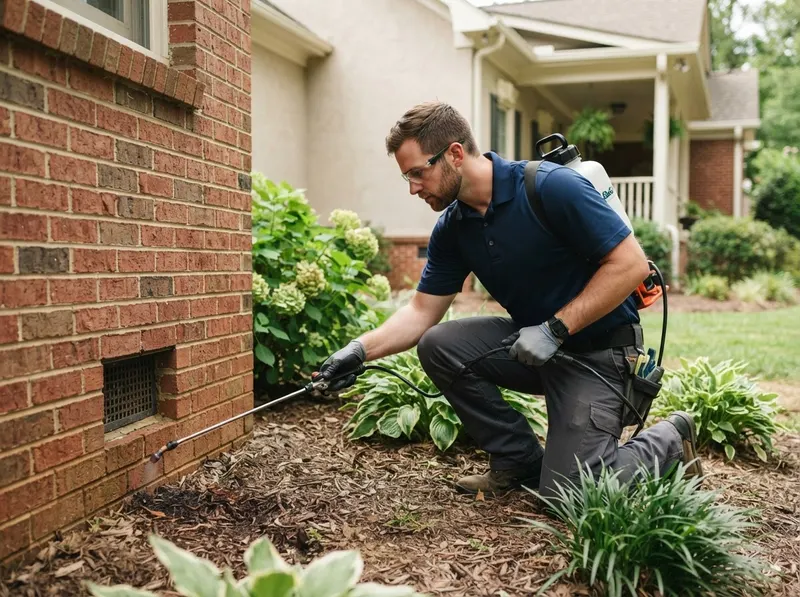
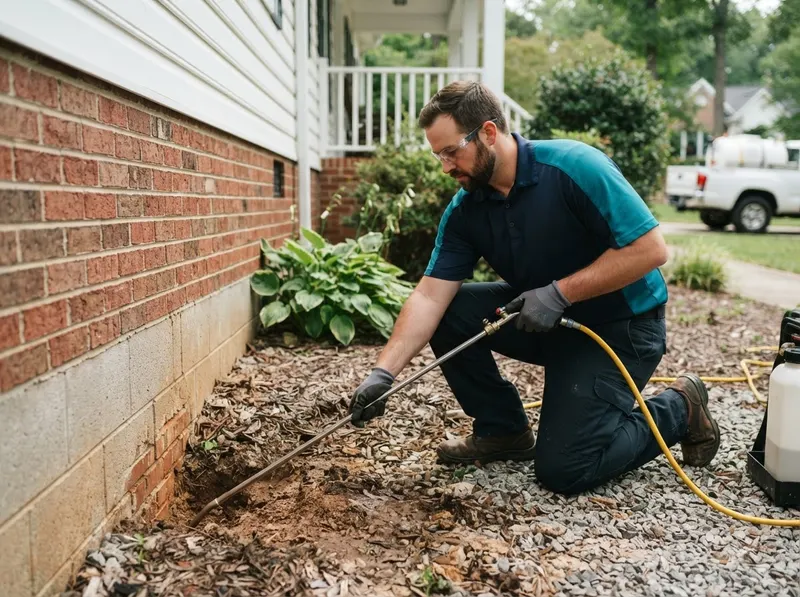
Subterranean termite eradication neutralizes colonies of Reticulitermes flavipes utilizing non-repellent liquid termiticides such as fipronil alongside low-profile inground cellulose baiting grids. Field application mandates continuous structural trenching measuring 6 inches wide by 6 inches deep around foundation stem walls, deep pressure injection along crawlspace piers, and sub-slab drilling through attached concrete slabs at precise 12-inch intervals. Formulations are applied at a regulated rate of 4 gallons per 10 linear feet per foot of depth, adhering strictly to South Carolina regulations administered by the Clemson University Department of Pesticide Regulation and chemical safety guidance codified by the US Environmental Protection Agency . This barrier arrests structural cellulose consumption, stopping critical damage to load-bearing floor joists, rim sills, and subflooring elements commonly compromised across high-humidity Upstate crawlspaces.

Get a quote →
Bed Bug Thermal & Residual Eradication in Greenville, SC

Bed Bug Thermal & Residual Eradication

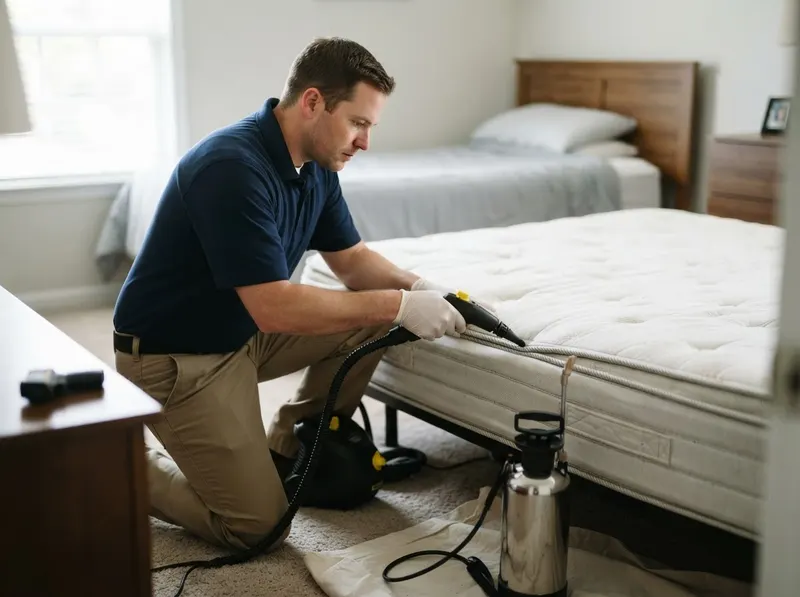
Bed bug remediation eliminates insecticide-resistant strains of Cimex lectularius using a calibrated dual-phase thermal and chemical protocol. Industrial electric or indirect-fired gas heating units elevate interior room ambient temperatures between 122°F and 135°F for a minimum sustained duration of 4 hours, penetrating thick textiles, structural baseboards, and interior wall voids to denature pest cellular proteins. Following heat dissipation, technicians apply residual amorphous silica gel desiccant dusts inside electrical switch plates and behind perimeter trim to provide ongoing passive protection against secondary introduction. All procedures reflect clinical vector-eradication literature published by the Centers for Disease Control and Prevention and commercial treatment parameters outlined by the Pest Control Technology Technical Resource Center .

Get a quote →
Ant Colony Elimination & Perimeter Defense in Greenville, SC

Ant Colony Elimination & Perimeter Defense

Ant management controls destructive carpenter ants (Camponotus pennsylvanicus), invasive Argentine ants (Linepithema humile), and stinging red imported fire ants (Solenopsis invicta) through multi-tiered toxicant transfer baits and protective chemical perimeters. Field specialists locate satellite nests across exterior landscape timbers, mulch beds, and concrete expansion joints, applying slow-acting non-repellent active ingredients such as indoxacarb or dinotefuran. Foraging workers transport these active chemistries throughout interconnected galleries, feeding the brood and reproducing queens through trophallaxis to precipitate complete colony collapse. Treatment methodologies follow integrated pest suppression benchmarks established by the Purdue University Medical Entomology Extension to halt re-infestation along building envelopes.

Get a quote →
Rodent Exclusion & Population Abatement in Greenville, SC

Rodent Exclusion & Population Abatement

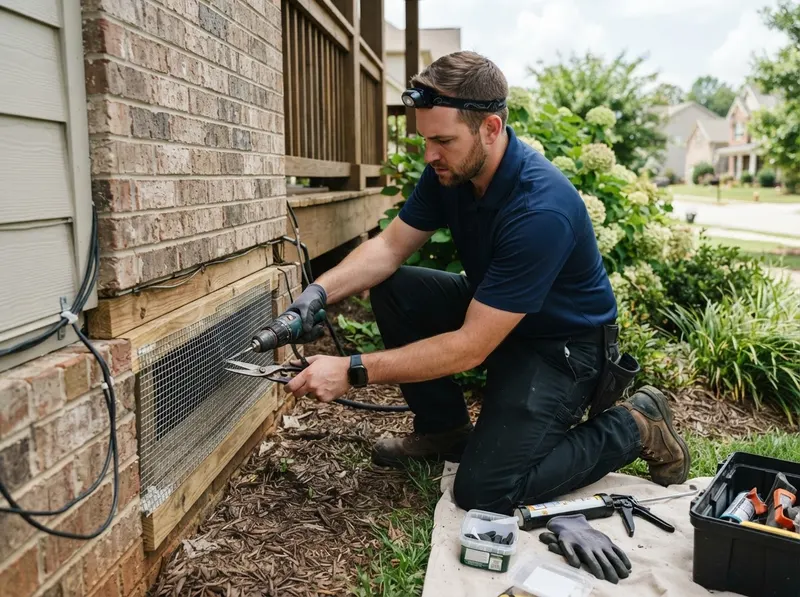
Rodent abatement eliminates invasive populations of house mice (Mus musculus), Norway rats (Rattus norvegicus), and roof rats (Rattus rattus) through architectural perimeter proofing and targeted snap-trapping arrays. Crews execute complete structural audits, sealing every aperture, foundation vent defect, and roofline transition exceeding 0.25 inches with rust-resistant 19-gauge hot-dipped galvanized hardware cloth, copper wire mesh packing, and heavy elastomeric joint sealants. Interior mechanical trapping captures resident animals within 7 to 14 days without relying on toxic anticoagulant rodenticides that risk indoor secondary poisoning or carcass decay within closed wall cavities. Protocols comply with sanitation standards defined by the World Health Organization Vector Control Framework and physical handling practices documented by the National Wildlife Control Operators Association .

Get a quote →

Spider Suppression & Web Clearing

Spider management controls hazardous and nuisance arachnids, concentrating on indigenous venomous populations of southern black widows (Latrodectus mactans) and brown recluse spiders (Loxosceles reclusa) that establish harborage in dark sub-levels, unfinished basements, and attic insulation. Technicians perform comprehensive mechanical de-webbing across exterior eaves, foundation bands, and window casings using extendable microfiber brushes treated with microcrystalline pyrethroids. Sub-floor crawlspaces and attic storage voids receive specialized micro-crack-and-crevice applications alongside low-volume dust distributions to eliminate hidden hunting adults and reduce secondary wood-boring or fabric insect prey populations. Morphological identification standards follow taxonomic guides supplied by the Entomological Society of America .

Get a quote →

Flea & Tick Yard Suppression

Flea and tick suppression neutralizes persistent populations of cat fleas (Ctenocephalides felis), blacklegged deer ticks (Ixodes scapularis), and lone star ticks (Amblyomma americanum) across exterior landscape zones. High-pressure hydraulic sprayers deliver tank mixtures of adulticides paired with juvenile hormone mimics, such as pyriproxyfen, targeting transitional brush boundaries, shaded ground covers, and damp turf perimeters where wildlife hosts drop active parasites. The insect growth regulator disrupts larval chitin development, halting egg hatching and nymph molting cycles for up to 60 days. These chemical mitigation strategies incorporate clinical vector-reduction frameworks developed by the Companion Animal Parasite Council to lower the transmission incidence of Lyme disease, anaplasmosis, and Rocky Mountain spotted fever.

Get a quote →

Cockroach Cleanout & Drainage Sanitization

Cockroach suppression targets pervasive infestations of German cockroaches (Blattella germanica), American cockroaches (Periplaneta americana), and smokybrown cockroaches (Periplaneta fuliginosa). Cleanout operations deploy insect growth regulators, microencapsulated concentrated sprays, and abamectin gel baits deep into commercial kitchen motor housings, plumbing pipe chaces, and bathroom wall voids. Exterior foundation borders, utility cleanouts, and sewer access caps receive granular moisture-resistant baits and targeted wettable-powder residual formulations to intercept peridomestic roaches foraging from Greenville's municipal stormwater networks. Structural hygiene standards align with structural maintenance advisories from the US Department of Housing and Urban Development Office of Lead Hazard Control and Healthy Homes .

Get a quote →

Stinging Insect Nest Removal & Aerial Defense

Stinging insect management addresses nest aggregations of bald-faced hornets (Dolichovespula maculata), European hornets (Vespa crabro), paper wasps (Polistes dominula), and yellowjackets (Vespula maculifrons). Technicians utilize specialized telescopic application lances and personal protective equipment to inject pressurized freeze-action pyrethroid aerosols or fast-acting insecticidal dusts directly into aerial paper nests, wall cavity voids, and underground burrows. Once biological neutralization is confirmed, nests are physically scraped down, bagged for disposal, and entry seams treated with residual repellents to inhibit future queen colonization, matching structural protection guidelines from the Alabama Cooperative Extension System Urban Entomology Unit .

Get a quote →
The essentials

What Greenville customers should know

  • Baseline residential pest control service diagnostics and initial foundational perimeter barrier treatments carry a minimum on-site service charge starting at $300 across Greenville County.
  • Subterranean termite reproductive swarms surge annually from March through May, necessitating non-repellent horizontal and vertical liquid termiticide barriers or hexaflumuron and noviflumuron baiting arrays.
  • Quarterly exterior perimeter microencapsulated chemical bands maintain active suppression against Argentine ants, odorous house ants, and smokybrown cockroaches for 60 to 90 days before natural environmental degradation occurs.
  • Mechanical rodent exclusion protocols permanently seal structural apertures larger than 0.25 inches using non-corrosive 19-gauge hot-dipped galvanized hardware cloth, copper wire stuffing, and hybrid polyurethane sealants.
  • Thermal bed bug remediation protocols elevate ambient structural temperatures to a sustained range between 122°F and 135°F, neutralizing heat-sensitive eggs, developmental nymphs, and adult Cimex lectularius without chemical residues.
The GoldenMeadow Pest Defense standard

Why Greenville keeps calling us back

01

A clear, written price

You get a firm, itemized quote for your pest control service before any work begins, no surprises, no pressure.

02

Your property, protected

Careful prep, tidy work, and a full cleanup when we are done. We treat your home and belongings like our own.

03

One crew, start to finish

The same trusted, background-checked team from the first call to the final check.

Buyer's guide

Choosing the right pest control service pro

Selecting the correct structural pest defense plan requires evaluating foundation architecture, site grade, moisture retention, and verified target pest taxonomy. If an owner discovers earthen mud tubes or shed reproductive wings on sill plates, foundation stem walls, or damp crawlspace floor joists near Cleveland Park, choose specialized subterranean termite intervention utilizing high-volume liquid fipronil trenching or inground bait matrices; if insect activity is confined to foraging perimeter ants, outdoor cockroaches, or silverfish invading food preparation surfaces during peak August humidity, choose a multi-zone exterior perimeter suppression program. The primary trade-off involves treatment depth versus structural disruption: foundational perimeter applications preserve interior privacy and protect external entry zones via non-invasive topical treatments every 60 to 90 days, whereas subterranean termite protocols require continuous perimeter trenching, sub-slab aggregate drilling through garage slabs or porches, and detailed interior moisture mapping.

If nocturnal biting pests infest mattress seams, box springs, and headboards in multi-family apartments or residential bedrooms, choose targeted whole-structure or localized bed bug thermal eradication combined with desiccant dusts; if distinct nocturnal gnawing, attic insulation displacement, or dropped fecal pellets occur near Paris Mountain, select physical rodent exclusion paired with mechanical trapping. Mechanical rodent exclusion involves architectural modifications, flashing additions, and crawlspace repairs that eliminate reliance on rodenticide baits, whereas exterior insect programs rely on recurrent microencapsulated chemical barriers that require scheduled replenishment every 60 to 90 days to counteract solar ultraviolet degradation and foothill soil runoff.

Investment

Pest Control Service cost and what drives it

Every project gets a firm, written price after a free on-site visit. Ranges below for orientation.

Initial Structural Assessment & General Exterior Treatment$300 - $475
Subterranean Termite Liquid Trench & Bait Installation$850 - $2,400
Comprehensive Bed Bug Multi-Room Thermal Eradication$950 - $2,850
Rodent Exclusion Barrier Sealing & Initial Attic Trapping$450 - $1,650
Seasonal Mosquito, Flea & Tick Yard Perimeter Spray$300 - $650
Commercial Nuisance Bird Exclusion Netting & Spikes$650 - $3,200
Quarterly Residential Pest Defense Maintenance ContractFrom $300
German Cockroach Intensive Commercial Kitchen Cleanout$425 - $1,150
Complete Crawlspace Vapor Barrier & Dehumidification System$2,200 - $6,800
Emergency Hornet, Wasp & Yellowjacket Nest Removal$300 - $550
Free, no-pressure estimate

Get it done right

Tell us about your pest control service job and we'll send a clear, written quote, usually the same day. Or just call and talk to a real Greenville pro.

(864) 215-5207
Get your free pest control service quote, Greenville

We only use your ZIP to check availability, no spam.

Where we work

Areas we serve near Greenville

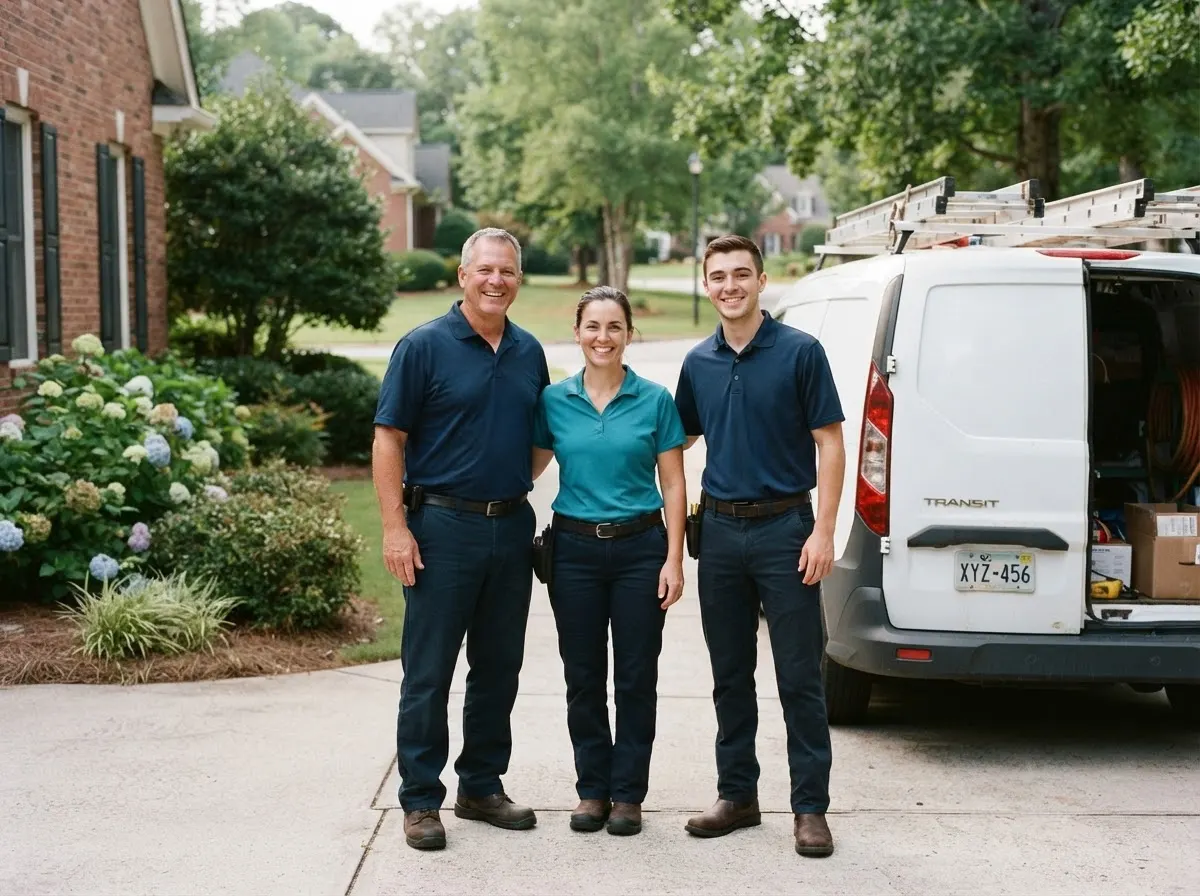
GoldenMeadow Pest Defense pest control service team in Greenville, SC

Greenville residences and industrial structures encounter specialized biological pressures directly influenced by the Reedy River drainage basin, local granite bedrock outcrops, and deep Cecil red clay loam soils that retain elevated subsurface moisture levels. Historic neighborhoods such as Augusta Road, Alta Vista, and North Main feature mature oak, hickory, and tulip poplar forest canopies that foster significant populations of acrobat ants, carpenter ants, and wood-boring beetles that readily migrate to structural roof perimeters and soft pine fascia. Throughout the humid summer period, where relative humidity routinely exceeds 75%, subterranean termite activity accelerates in the dense soil layers adjacent to foundation footings, while American and smokybrown cockroaches push out of municipal storm lines and Reedy River drainage culverts into living areas. Along the perimeter zones flanking Paris Mountain State Park, shallow bedrock and seasonal temperature drops drive white-footed mice, eastern woodrats, and venomous brown recluse spiders out of natural granite crevices and into heated structural basements, crawlspaces, and residential attic insulation.

North MainAugusta RoadOverbrookParkins MillGower EstatesAlta VistaNicholtownWest EndBotany Woods
Questions

Common questions

What is the baseline cost for professional pest control service in Greenville?
Professional pest control service in Greenville begins at a minimum diagnostic and treatment fee of $300, which includes a comprehensive structural inspection, pest identification, and initial liquid perimeter chemical application. Specialized corrective services require custom estimates based on square footage, architectural complexity, and target pest biology: complete subterranean termite liquid soil trenching or inground bait station installations range from $850 to $2,400, while multi-room bed bug thermal remediation programs range from $950 to $2,850. GoldenMeadow Pest Defense confirms exact pricing through a written estimate following an in-person structural evaluation.
How often should Greenville homeowners schedule professional exterior perimeter treatments?
Greenville homeowners achieve the most consistent protection by maintaining an exterior perimeter maintenance schedule every 60 to 90 days. This quarterly cadence directly compensates for chemical breakdown caused by high summer ultraviolet radiation, heavy seasonal rainfall along the Reedy River corridor, and winter moisture saturation in native red clay soils. Consistent barrier replenishment stops foraging Argentine ants, smokybrown cockroaches, and spiders before they penetrate exterior sill plates or foundation expansion joints.
What state credentials and regulations govern pest control operators in Greenville County?
Every commercial pesticide applicator operating in Greenville County must hold a valid commercial applicator license issued by the Clemson University Department of Pesticide Regulation pursuant to the South Carolina Pesticide Control Act. Technicians must be formally certified in Category 7A (Industrial, Institutional, Structural, and Health-Related Pest Control) to perform general structural treatments, and Category 7B (Termite Control) to perform soil trenching, sub-slab drilling, or structural wood-destroying insect inspections.
Why are subterranean termites exceptionally destructive across Upstate South Carolina?
Subterranean termites (Reticulitermes flavipes) flourish throughout Upstate South Carolina due to warm soil profiles, abundant moisture in dense Cecil clay, and extended frost-free periods. During the annual swarm season from March through May, reproductive alates disperse in large numbers to initiate new colonies in damp crawlspaces, foundation form boards, and landscaping ties. Because an established subterranean colony can consume several pounds of structural timber annually, preventive liquid non-repellent termiticide barriers or inground baiting networks are essential to protect the structural integrity of local homes.
How does GoldenMeadow Pest Defense eliminate rodents without endangering pets or native wildlife?
GoldenMeadow Pest Defense focuses on permanent physical exclusion rather than relying solely on exterior rodenticide bait boxes that can present secondary poisoning risks to predatory birds and household pets. Technicians physically inspect exterior perimeters to identify and seal all structural openings exceeding 0.25 inches using heavy 19-gauge galvanized wire hardware mesh, expanding elastomeric foams, and copper wire mesh. Interior infestations are resolved using mechanical snap traps positioned inside locked stations or restricted attic spaces, which ensures safe, rapid capture and straightforward carcass disposal.
What specific property preparations are required before a thermal bed bug treatment?
Thermal bed bug remediation mandates targeted property preparation to protect delicate personal items while ensuring optimal heat distribution throughout living quarters. Residents must remove aerosol cans, pressurized vessels, flammable liquids, heat-sensitive prescription medications, wax candles, vinyl window blinds, oil paintings, and live plants or household pets. Clothing and bedding must be loosely staged in open laundry baskets or closets to permit convection air circulation from industrial heating ductwork, allowing ambient air to reach the required 122°F to 135°F lethal thermal threshold in every corner of the room.
How does high soil moisture in Greenville crawlspaces affect structural insect activity?
Unconditioned dirt crawlspaces with relative humidity levels exceeding 70% create ideal breeding environments for wood-decay fungi, subterranean termites, and wood-boring powderpost beetles. Damp subfloor timbers absorb ambient air moisture, raising the internal wood moisture content above 19%, which softens wood fibers and makes framing highly susceptible to insect feeding. GoldenMeadow Pest Defense installs heavy 12-mil to 20-mil vapor barriers and high-capacity dehumidifiers to maintain crawlspace moisture levels below 55%, creating a dry environment that halts insect colonization and wood rot.
Can outdoor pest perimeter barriers withstand Greenville's frequent heavy summer thunderstorms?
Modern professional exterior pest barriers utilize microencapsulated formulations and water-insoluble synthetic pyrethroids designed to bind tenaciously to brick, concrete masonry units, stone veneers, and packed clay soils. Once dried (typically within 60 minutes of application), these microscopic chemical capsules slowly release active ingredients over 60 to 90 days. While normal precipitation will not wash away the treatment, persistent gutter overflows, standing foundation water, or extreme localized flooding may require supplemental localized treatments along foundation drip lines.
What distinguishes German cockroach management from ordinary outdoor roach treatments?
German cockroaches (Blattella germanica) are obligate indoor pests that reproduce exponentially inside kitchens and bathrooms, carrying potential allergens and bacteria, whereas outdoor species such as American or smokybrown cockroaches live in mulched garden beds and crawlspaces, occasionally wandering inside for water. Eliminating German cockroaches requires an intensive cleanout protocol utilizing targeted gel baits, insect growth regulators to interrupt reproductive cycles, and micro-crack-and-crevice treatments around heat-generating appliances, whereas outdoor roach control relies on broad exterior perimeter granular applications and mechanical sealing of foundation vents.
What methods safely eliminate aggressive hornet or yellowjacket nests on residential structures?
GoldenMeadow Pest Defense neutralizes aerial and subterranean stinging insect colonies using high-output aerosol freeze agents or microencapsulated insecticidal dusts applied via pressurized telescopic extension poles. Technicians wear protective containment suits, applying treatments directly into nest entry apertures during periods of low insect activity to ensure complete queen and worker exposure. After the population is neutralized, the physical nest structure is scraped away, removed, and the mounting site treated with residual repellents to prevent future colony development.
Get started today

Free estimates for Greenville & the surrounding area.